
When families begin exploring home care options, one common question comes up early: companionship care vs personal care. Both services support seniors living at home, but they serve very different needs. Understanding the difference helps families choose the right level of care without over- or under-supporting their loved one.
For Calgary families, this decision often comes during a transition period. A senior may still be independent but need emotional support, or they may be facing physical challenges that require hands-on assistance. This guide explains the differences clearly so families can make informed, confident care decisions.
Key Takeaways
- Companionship care focuses on emotional support and daily engagement
- Personal care involves hands-on assistance with hygiene and mobility
- Choosing the right care depends on physical ability and daily needs
- Some seniors transition from companionship to personal care over time
- Calgary families benefit from understanding care levels early
“The right care is not about doing more, but about doing what is truly needed at the right time.”
Difference Between Companionship Care and Personal Care
The difference between companionship care and personal care lies in the type of support provided. Companionship care is non-medical and focuses on emotional well-being, social interaction, and basic daily assistance. It is ideal for seniors who are physically capable but may feel isolated or need encouragement throughout the day.
Personal care, on the other hand, involves hands-on assistance. This includes help with personal hygiene, mobility, dressing, and toileting. Seniors who experience physical limitations, balance issues, or health-related challenges often require this level of care to remain safe at home.
Understanding this difference helps Calgary families avoid choosing care that is either insufficient or more intensive than necessary.
Choosing Companionship or Personal Care in Calgary
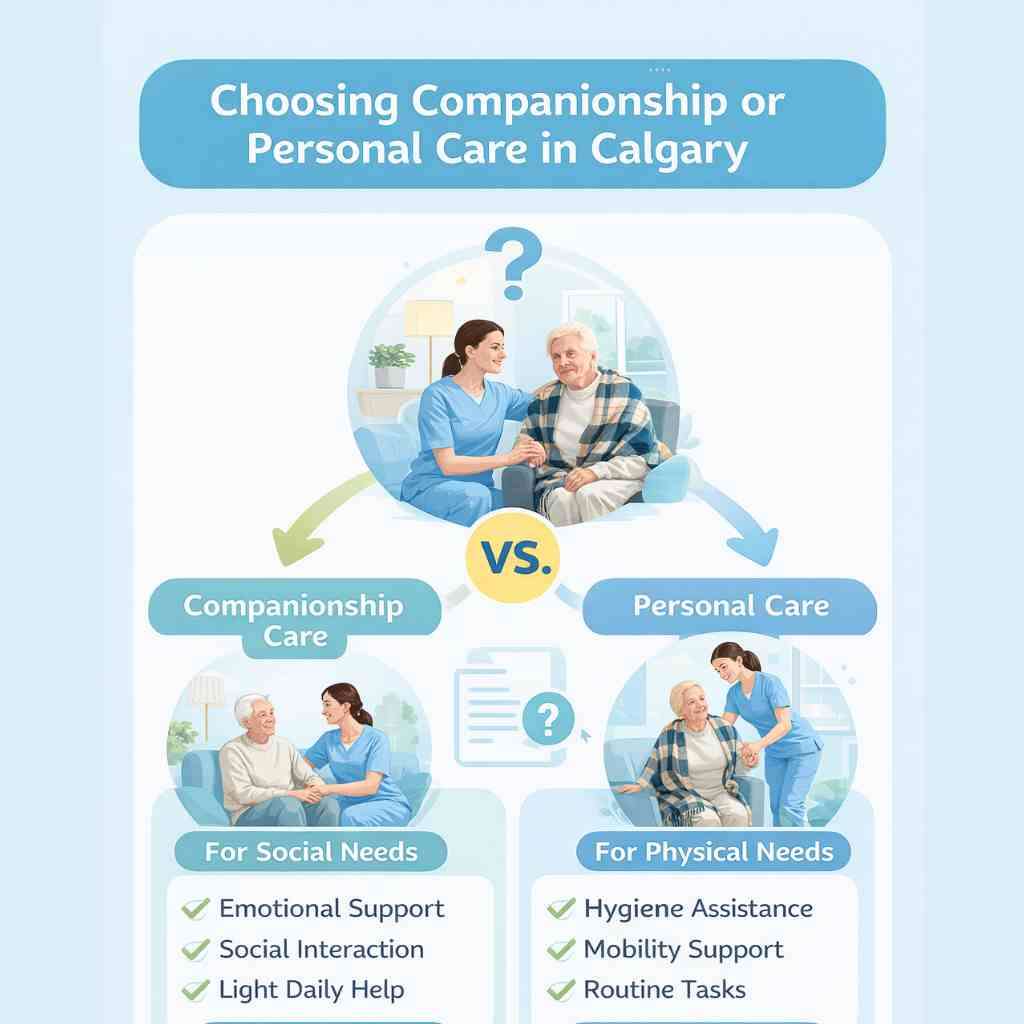
Choosing companionship or personal care in Calgary depends on a senior’s daily routine, physical ability, and emotional needs. Some seniors are fully mobile but benefit from regular conversation, reminders, and companionship throughout the day. Others need physical assistance that cannot be safely handled by family alone.
Calgary families often begin with companionship care and later transition to personal care as needs change. This flexible approach allows seniors to age comfortably at home while adjusting care levels without disruption.
Local familiarity also matters. Seniors feel more comfortable when caregivers understand their environment and routines, whether they live near Fish Creek Provincial Park or frequently visit Shawnessy Shopping Centre.
When Seniors Need Personal Care Instead of Companionship
When seniors need personal care instead of companionship, physical limitations are usually the deciding factor. Difficulty bathing, dressing, standing, or using the bathroom safely are signs that hands-on care is required. At this stage, companionship alone is no longer enough to ensure safety and dignity.
Personal care provides structured support with daily routines while preserving independence where possible. Caregivers assist without taking over unnecessarily, helping seniors remain involved in their own care.
Recognizing this transition early helps families avoid emergencies and unnecessary hospital visits.
What Companionship Care Includes
Companionship care focuses on emotional connection and daily engagement. Caregivers provide conversation, social interaction, meal companionship, light household support, and reminders. This service is ideal for seniors who live alone and may feel isolated but do not require physical assistance.
Social engagement plays a major role in mental well-being. Regular interaction helps reduce loneliness and supports emotional health, especially for older adults who may no longer drive or attend social events frequently.
What Personal Care Involves
Personal care includes direct physical assistance with daily activities. This may involve help with bathing, grooming, dressing, mobility, and toileting. Caregivers also provide supervision to reduce fall risks and support safe movement around the home.
This type of care is essential when health or mobility declines. It ensures seniors receive respectful, professional support while remaining in a familiar environment.
How Families Can Decide the Right Care Level
Families often struggle with knowing when to adjust care. The best approach is to observe daily routines and assess safety risks. If a senior needs reminders and company but remains physically independent, companionship care may be enough. If physical tasks become challenging, personal care should be considered.
Open conversations with seniors are important. Including them in decisions helps preserve dignity and builds trust throughout the care process.
Can Seniors Transition Between Care Types
Yes, many seniors transition from companionship care to personal care over time. Needs change gradually, and care plans should adapt accordingly. Starting with companionship care allows seniors to build relationships with caregivers before physical assistance becomes necessary.
This gradual transition supports emotional comfort and reduces stress for both seniors and families.
FAQs
What is companionship care and what does it include?
Companionship care focuses on emotional support, conversation, reminders, and social engagement without hands-on physical assistance.
When does a senior need personal care instead of companionship?
When daily tasks like bathing, dressing, or moving safely become difficult, personal care is usually required.
What does personal care involve for seniors?
Personal care includes physical assistance with hygiene, mobility, and daily routines to ensure safety and comfort at home.
When is companionship care enough for a senior?
Companionship care is enough when a senior is physically independent but benefits from regular interaction and supervision.
Final Thoughts
Understanding companionship care vs personal care helps Calgary families make informed decisions that truly support their loved ones. Both care types play an important role at different stages of aging. By choosing the right level of care, families can ensure seniors remain safe, supported, and comfortable at home while maintaining independence and dignity.