
Everyday activities such as bathing, dressing, using the bathroom or moving around the home can become difficult with age, illness or reduced mobility. Getting the right assistance can help someone continue their familiar routines without managing these challenges alone.
Truly HomeCare provides personal care services Calgary seniors and adults can receive in their own homes. Our trained personal support workers assist with bathing, grooming, toileting, dressing, mobility, transfers, mealtime routines and other activities of daily living.
Support is planned around each person's abilities, preferences and care needs. The focus is on providing practical assistance while respecting their privacy, dignity and independence.
Registered with Alberta Blue Cross for eligible home care.
Firsthand experiences from families we've supported.
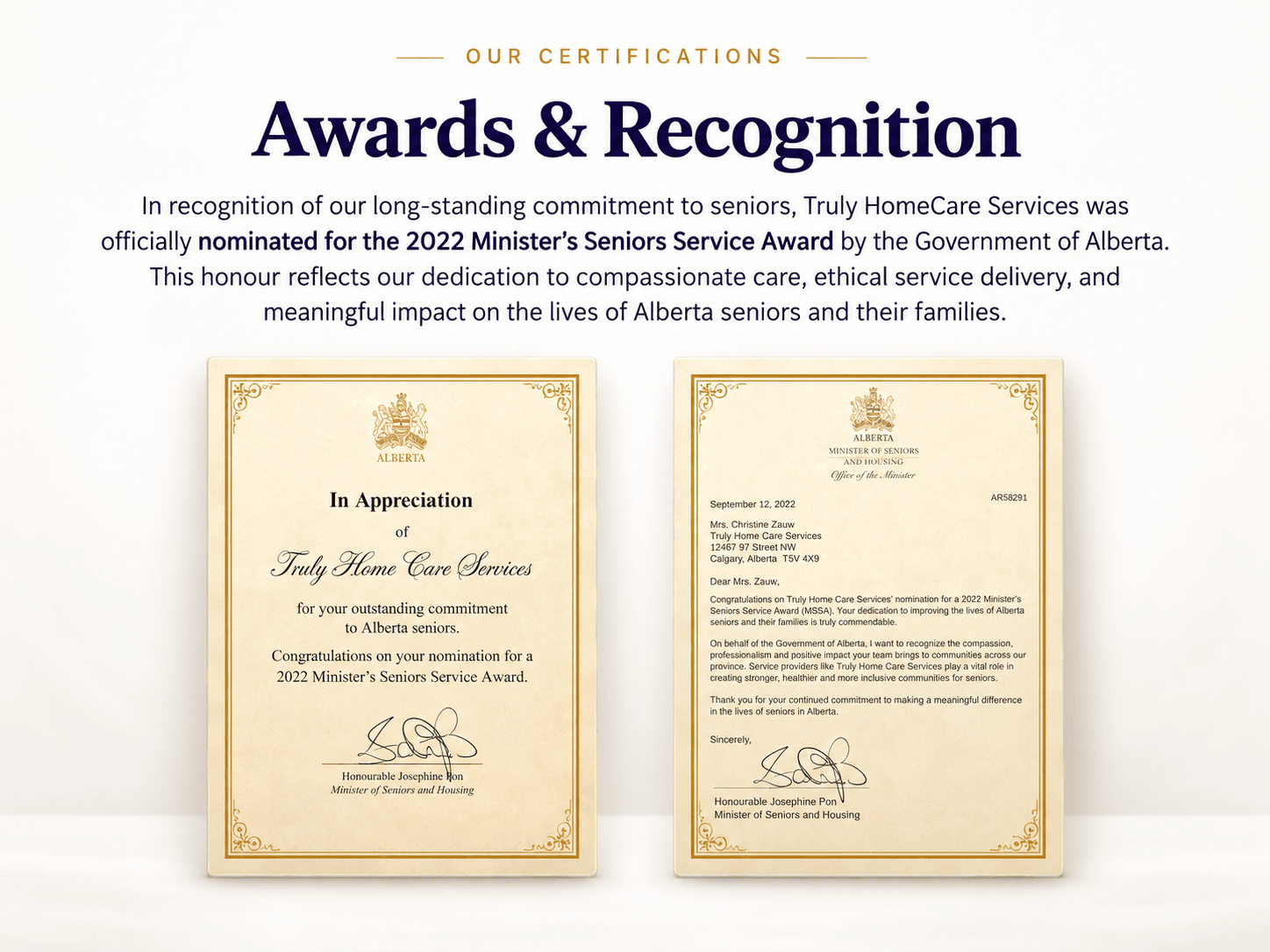
Nominated for Alberta’s 2022 Minister’s Seniors Service Award.
Posted on Google
 Sherry “Sh” Banks Ann
Trustindex verifies that the original source of the review is Google.
I am incredibly grateful for the exceptional care my family received from Truly HomeCare. From the very first conversation, Christine and her team were compassionate, organized, and genuinely committed to meeting our needs. The caregivers were reliable, respectful, and treated our loved one with dignity and kindness every single day. Communication was excellent — any questions we had were addressed quickly, and the team always went above and beyond to make sure we felt supported. Truly HomeCare didn’t just provide services; they provided peace of mind during a very stressful time. If you are looking for a trustworthy, professional, and caring homecare agency in Calgary, I highly recommend Truly HomeCare. They truly live up to their name.Posted on Google K. KleinTruly home care was instrumental in our mother's ability to remain independent at home after a serious injury and hospital stay. Having a familiar person come weekly to help our mom remain in her home when she was unable to fully care for herself was such a relief for us, her kids, who do not live nearby. The care and breadth of help they provided was above and beyond typical provincially provided home care services. The support people who bonded and supported our mother made all the difference in her quality of life and ability to remain safe, nourished, and healing in her own home. We are so grateful to know Christine and her team of compassionate people supporting seniors, and/or people who live alone, remain independent and safe at the same time.Posted on Google
 JamesThis homemade service has been wonderful for my dad. The staff are always kind, reliable, and always go above and beyond to make sure that he is comfortable. I highly recommend them to any family in need for senior care.Posted on Google
 Nabasa DariusI was so desperate to keep my 91 years old mother Deborah at home as it was her wish to spend her last days at home. I contacted Christine Care- coordinator with Trulyhomecare who guided us to apply for client directed care. My mum was able to get fulltime care without any issues. Iam so happy to inform you that My mum is still at home and living healthy and stronger. Thanks Truly Homecare .Posted on Google
 Babara KenyaTrulyhomecare is the most compassionate Team i have ever encountered. I was recommended by Sheila Beans and so far my family is so bless to have found them. Christine takes time to assess and listen to our concern and develop the careplans carefully, my dad is more stronger than ever before. Thanks TrulyhomecarePosted on Google
 Nora KidenMy father Peter was only 68years when he suffered stroke unfortunately he had cancer too and had to go into palliative care, he refused to go Hospice. I contacted Christine(Manager of Trulyhomecareservices) who helped me and my dad in his last days at the Comfort of our home. Thanks for providing us all the comfort we needed ❤Posted on Google
 LindseyMy grama was 98years and she didn't want to stay in a nursing home, Truly homecareservices came in, My mum Nancy can not thank God enough for their services, they are always opened 24/7. Thanks Christine and your Team of Nurses.
Personal care may be helpful when someone wants to continue living at home but finds it difficult to manage certain activities independently.
These challenges can develop gradually with age or follow an illness, injury, hospital stay or change in mobility. Some people require assistance with only one or two activities, while others need regular support with several parts of their day.
In-home personal care for seniors and adults may be appropriate when someone:
For example, a senior may be able to prepare breakfast and manage household activities but need help getting dressed after a shower. Another person may require assistance with toileting, transfers and morning routines.
The level of support should reflect what the individual can do safely, where assistance is needed and whether any physical or medical requirements call for additional assessment.
Families who find it increasingly difficult to provide hands-on assistance themselves can also discuss how a personal care arrangement might fit alongside their existing involvement.

Personal home care services focus on practical assistance with the daily activities a person finds difficult to manage alone. The help provided can range from limited assistance with a particular routine to more regular support involving several activities.
Truly HomeCare offers six main areas of personal care assistance. The specific tasks and level of physical support are determined through individual care planning.
Bathing can become challenging when someone has difficulty standing, maintaining balance or reaching different parts of their body.
Our caregivers can provide assistance with bathing, showering and everyday hygiene routines based on the person's needs and agreed care arrangement.
The type of assistance may depend on whether the person uses a shower, bathtub or mobility aid, and how much they can comfortably manage themselves.
Bathroom access and any complex transfer requirements should be discussed before care begins.
Getting dressed, fastening clothes or completing grooming activities may become more difficult because of reduced mobility, stiffness, weakness or other limitations.
Personal care assistance can include help with dressing, grooming and preparing for familiar morning or evening routines.
Care should respect the individual's clothing preferences and encourage participation in tasks they can still manage.
For example, one person may need help with buttons and footwear, while another requires more extensive assistance getting dressed.
Needing help with toileting or continence-related hygiene can be a sensitive concern for seniors and their families.
Our personal care services include respectful assistance with bathroom routines and agreed continence-related tasks.
The level of assistance may vary depending on mobility, independence and the person's ability to manage hygiene activities.
Privacy, comfort and individual preferences should be considered when planning these routines. Medical concerns involving infections, persistent skin problems or changes in continence require appropriate healthcare advice.
Moving around the home may become difficult when a person has balance problems, weakness or reduced mobility.
Caregivers may provide agreed assistance with walking, changing positions and moving between a bed, chair or other areas of the home.
Before arranging support, families should explain whether the person uses a walker, wheelchair or other mobility aid and what physical assistance is required.
Complex transfers, mechanical lifts or situations requiring more than one caregiver need specific assessment. Routine personal care should not be assumed to cover every type of physical transfer.
Some people can enjoy meals independently but need help with particular parts of their mealtime routine. Others may require more direct assistance.
Personal care can include agreed mealtime assistance based on the individual's abilities and daily requirements.
Care planning should distinguish assistance with eating from grocery shopping, extensive meal preparation or medically prescribed nutrition support, which may involve different services.
Difficulty swallowing, frequent choking or other clinical feeding concerns should be assessed by an appropriate healthcare professional.
Personal care is not limited to one isolated activity. Many people need assistance with several tasks that naturally occur together during the day.
For example, a morning visit might involve help with getting out of bed, toileting, washing, dressing and settling into the next part of the daily routine.
Another person may need assistance with evening personal hygiene and preparing for bed.
The purpose is to arrange appropriate help around the person's existing habits and needs rather than applying the same routine to every client.
The amount of assistance can change over time. Families should discuss new mobility concerns, increased dependence or additional care requirements so that the arrangement remains appropriate.
Arranging personal care services Calgary families can depend on starts with understanding the individual's daily challenges, abilities and personal preferences.
A clear care plan helps identify which activities require assistance, the level of physical support involved and how visits can fit into the person's routine.
Our personal care process follows three steps.
We begin by discussing the individual's everyday routines and the activities they find difficult.
Families can explain the assistance needed with bathing, dressing, toileting, mealtimes, mobility or transfers. It is also helpful to share information about mobility aids, bathroom access, existing healthcare instructions and preferred schedules.
This initial discussion helps identify the type of support to consider and whether further assessment is necessary.
A care plan is developed around the individual's abilities, preferences and assistance needs.
The plan helps clarify which personal activities require support, how much assistance is appropriate and how care should fit into established daily routines.
Family members can contribute relevant information with the individual's involvement and consent, where appropriate.
Mobility limitations or more complex physical requirements should be considered before specific care activities are agreed upon.
Caregivers provide assistance according to the agreed arrangement and schedule.
Personal care needs may change following illness, reduced mobility or changes in a person's ability to manage daily tasks.
Families can discuss new concerns or changes in routines so that the current care plan can be reviewed and adjusted where appropriate.
Personal care involves trusting someone to help with private daily routines. Families want to understand how the provider approaches these responsibilities, whether appropriate support can be arranged and what evidence stands behind the business.
Truly HomeCare Services combines individual care planning with established provider recognition and a focus on respectful non-medical assistance.
Truly HomeCare Services is approved and registered with Alberta Health Services for Client Directed Care and registered with Alberta Blue Cross for eligible home care services.
These existing provider credentials are relevant when evaluating the agency. The type and amount of publicly funded care a person may receive still depend on their individual eligibility and authorised services.
Truly HomeCare Services was nominated for the 2022 Minister's Seniors Service Award by the Government of Alberta.
This nomination is part of the agency's established recognition and reflects its contribution to supporting seniors and their families.
Truly HomeCare's trained personal support workers focus on non-medical assistance with personal routines and everyday activities.
The support required is considered through individual care planning, including assistance with sensitive tasks such as dressing, bathing and toileting.
Any clinical procedures or specialised physical requirements must be considered separately from routine non-medical personal care.
The agency's approach considers the individual's usual routines, comfort, care needs and personal preferences.
Family members can share relevant information and concerns to help care fit the person's daily life.
Caregiver preferences and continuity can be discussed as part of planning, although a specific caregiver assignment should not be treated as guaranteed.

Accepting help with bathing, dressing or toileting can feel uncomfortable for someone who has managed these activities independently for years. Respectful personal care should take account of the individual's preferences, explain assistance clearly and recognise the importance of privacy during sensitive routines.
Support should also preserve the person's involvement wherever possible. One senior may be able to wash their face and choose their clothes but need help with showering or footwear. Another may manage most activities independently while requiring assistance getting to the bathroom or standing from a chair.
Maintaining familiar routines can make personal assistance easier to incorporate into daily life. Families can discuss preferred bathing times, clothing choices, mobility concerns and other personal details during care planning. The objective is to provide the help needed without unnecessarily taking over activities the individual can still manage.
Families comparing personal care services Calgary providers offer often want to understand why quotations can differ and which arrangements are suitable for their budget.
Personal care requirements vary. Some people need assistance with a short morning routine, while others require multiple visits or more extensive help with mobility, hygiene and daily activities.
The main factors that can influence a private personal care quotation include:
The duration of each visit and whether assistance is needed occasionally, daily or several times throughout the week.
Whether the person needs limited help with selected routines or hands-on assistance with bathing, toileting, dressing and other activities.
The amount of physical assistance needed, use of mobility equipment and whether additional assessment or staffing is required.
The requested days, visit times and whether evening or overnight arrangements are needed.
Support beyond the agreed personal care tasks, including needs that require separate services or qualified healthcare professionals.
Families can arrange private personal care directly with a provider. Before confirming visits, ask for a quotation that explains the assistance included, the proposed schedule, any minimum visit requirements and possible additional charges.
Eligible Albertans may also access authorised home care through the Client Directed Home Care Invoicing (CDHCI) program. Eligibility and covered services depend on an assessment and an approved care plan. Alberta Blue Cross administers program billing, and charges beyond authorised limits may remain the client’s responsibility.
Truly HomeCare is registered for eligible client-directed care arrangements. However, provider registration does not guarantee that every individual or requested activity qualifies for public funding.
Providing personal care at home involves understanding how the living environment affects everyday activities. In Calgary houses, apartments and condominiums, bathroom layouts, stairs, narrow doorways and limited space around beds or chairs can influence the assistance someone needs. Families arranging bathing, toileting or mobility support should discuss shower access, mobility equipment and any physical difficulties before visits begin.
Calgary winters can also create practical challenges with icy entrances, snow-covered pathways and reduced daylight. For apartment or condominium visits, entry instructions, lift access and visitor arrangements may need consideration. Families can share these details along with preferred morning or evening routines when discussing home care, helping ensure the proposed assistance suits their loved one's living environment.
A personal caregiver can provide assistance with everyday activities such as bathing, showering, dressing, grooming, toileting, mobility, transfers and mealtime routines. The type of support depends on the individual's abilities, personal preferences and agreed care plan. Some people require assistance with one specific task, while others need help with several activities throughout the day. Families should explain any physical limitations, mobility equipment or unusual care requirements during their initial consultation so that suitable assistance can be discussed.
Personal care involves hands-on assistance with activities of daily living, including bathing, dressing, toileting and mobility. Companionship care primarily focuses on conversation, social engagement and shared activities rather than intimate physical assistance. A person who manages personal hygiene independently but spends long periods alone may benefit from companionship, while someone struggling with bathing or transfers may need personal care. Families can review our companionship care in Calgary to understand the differences and determine whether both types of support could be useful.
Yes. Truly HomeCare includes bathing, personal hygiene, toileting and continence-related assistance within its personal care services. The exact activities should be agreed upon according to the person's needs, preferences and physical abilities. For example, someone may need help accessing the shower or bathroom, while another requires more assistance completing personal hygiene routines. Families should mention bathroom accessibility, mobility concerns and any existing health-related instructions. Medical problems such as persistent skin irritation, infections or sudden continence changes should be assessed by an appropriate healthcare professional.
Personal care can include agreed assistance with walking, changing positions and moving between areas such as a bed, chair or bathroom. The amount of physical help needed is important because supporting someone who can stand with assistance is different from moving someone who cannot bear weight. Families should describe existing mobility aids, previous falls, transfer difficulties and the home's available space. Complex lifting, mechanical equipment or transfers requiring multiple caregivers may need separate assessment and suitable staffing. No transfer arrangement should be assumed appropriate until the person's requirements are understood.
Personal care visits can be discussed according to the individual's needs and preferred routine. Some families require help with morning bathing and dressing, while others need assistance at different times or more frequently throughout the week. Truly HomeCare describes flexible short-term, long-term and overnight care options, but actual scheduling depends on the care arrangement and availability. During consultation, families should ask about visit duration, preferred days, any minimum booking requirements and how schedule changes are handled.
Yes. People living with dementia may require assistance with bathing, grooming, toileting, dressing or other daily activities as memory and practical abilities change. The care plan should consider communication needs, familiar routines, supervision requirements and whether the person can safely participate in specific tasks. Personal care alone may not address all dementia-related concerns, particularly where severe confusion, walking-away risks or complex clinical needs are involved. Families can review Truly HomeCare's dementia home care in Calgary when more specialised support may be appropriate.
The cost of personal care services Calgary families arrange depends on the duration and frequency of visits, the type of physical assistance required, scheduling needs and whether additional services are involved. Someone needing help with a short morning routine may require a different care arrangement from a person needing extensive assistance with mobility, toileting and personal hygiene. A quotation should explain the services included, minimum visit requirements if applicable, scheduling conditions and possible additional charges. Families can discuss these factors with Truly HomeCare before agreeing to a plan.
Personal care can be included in Alberta's Client Directed Home Care Invoicing program when an individual meets the eligibility requirements and the activities are authorised through their public home care assessment. The program allows eligible clients to select a participating agency for approved services and hours. Registration with Alberta Blue Cross does not mean every service request will automatically be covered. Families should review their authorisation, available funding and any charges beyond the approved limits before choosing an arrangement. Official details are available through Alberta Blue Cross's Client Directed Home Care information.
If your parent or loved one is finding bathing, dressing, toileting, mobility or other daily activities increasingly difficult, you can discuss their needs with Truly HomeCare Services.
Our Calgary team can help your family explore suitable in-home personal care arrangements based on the individual's daily abilities, preferences and level of assistance required.