
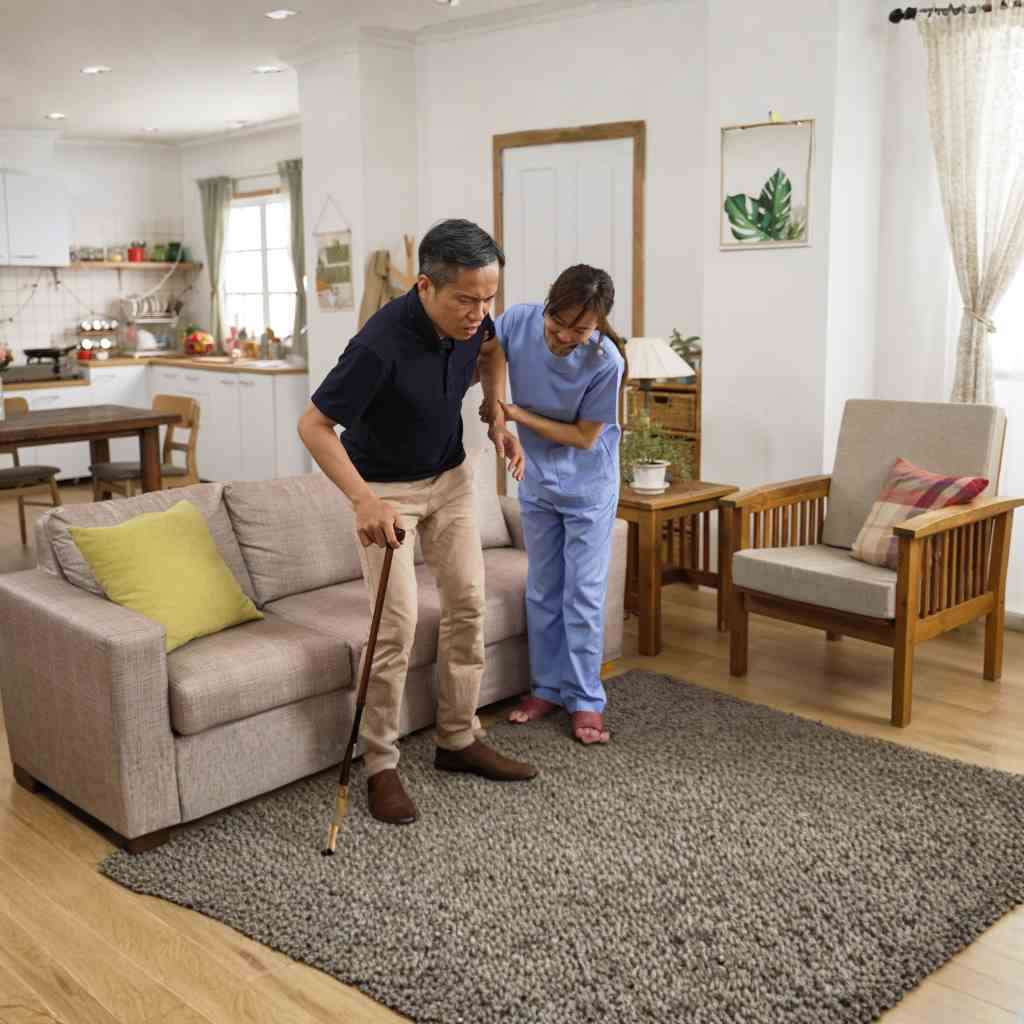
Arthritis can gradually change the way an older adult handles ordinary tasks at home. Getting out of bed may take longer. Buttons may become frustrating. Standing at the kitchen counter or carrying laundry may require more effort than it once did.
For families, the important thing to understand is that arthritis in seniors does not automatically mean complete dependence. Often, only certain movements or parts of a routine become difficult.
Key Takeaways
- Arthritis may make selected daily tasks harder without making a senior completely dependent.
- Dressing, bathing, toileting, and grooming can become difficult when reaching, gripping, bending, or standing is limited.
- Adapting a task is often better than immediately taking it away from the senior.
- Home setup matters because repeated bending, lifting, reaching, and carrying can add difficulty.
- Regular support may help when several everyday routines now require assistance.
Tip: Place frequently used clothing, toiletries, kitchen items, and medications within easy reach so stiff joints do not make every routine unnecessarily harder.
How Does Arthritis Change Daily Life at Home?
The effect depends on which joints are involved. Hand stiffness may make gripping and fastening difficult, while hip or knee problems may affect standing, walking, and stairs.
Arthritis can affect everyday activities such as walking, climbing stairs, gripping objects, handling household items, and completing routine chores.
A senior may therefore start avoiding tasks that once seemed simple. They may leave laundry downstairs, choose clothing without buttons, avoid preparing a full meal, or take much longer to get ready.
Morning routines can be especially frustrating when joints feel stiff after resting.
The important sign is not whether a task takes longer. Families should notice when an activity is repeatedly skipped, cannot be completed safely, or now requires assistance every time.
Arthritis and Personal Care During the Morning Routine
Personal care involves many small movements that are easy to overlook until they become difficult.
With arthritis in seniors, the challenge may be one specific step rather than the entire routine.
Getting Out of Bed and Starting the Day
Moving from lying down to sitting, placing the feet on the floor, and standing may take more time when hips, knees, hands, or the back feel stiff.
Families can allow extra time and make sure commonly needed items are easy to reach instead of rushing the senior through the routine.
Dressing and Grooming
Buttons, zippers, shoelaces, socks, jewellery, hairbrushes, and small grooming items can be difficult when finger movement or grip is limited. Simple aids such as easier fasteners, zipper pulls, button hooks, and long handled shoehorns may make these tasks easier.
The senior may still be able to choose their clothing and complete most of the dressing routine independently.
Bathing and Toileting
Getting on and off a toilet, stepping into a bathing area, reaching the lower legs, or standing long enough to wash can become more demanding.
Support should focus on the difficult step. Needing help with socks or getting safely set up for bathing does not automatically mean the senior needs full assistance with the entire routine.
Arthritis Mobility Problems Around the Home
Walking from the bedroom to the bathroom, standing from a chair, or climbing a flight of stairs may become slower when joints are painful or stiff.
The answer is not necessarily to prevent the senior from moving around the home. Instead, look for parts of the environment that create unnecessary effort.
Beds, Chairs, and Standing Up
Very low beds, deep sofas, and soft chairs can make standing more demanding.
Frequently used seating should allow the senior to sit comfortably and get up without struggling unnecessarily.
Stairs and Room-to-Room Movement
Stairs can become tiring because they require repeated movement through the knees, hips, and ankles.
Avoid making the senior carry laundry, meals, or other objects on stairs when doing so makes movement difficult or unsafe.
Frequently Used Items Within Reach
Everyday items should not require repeated bending, stretching, or climbing.
Moving clothing, dishes, toiletries, and other frequently used supplies to easier-to-reach locations can simplify several routines without reducing independence.
Meal Preparation and Household Tasks With Joint Stiffness
Cooking combines many actions: opening containers, gripping utensils, cutting ingredients, turning taps, lifting pans, carrying plates, and standing at a counter.
When hand or shoulder movement is limited, one small part of meal preparation may prevent the senior from completing the whole task.
Kitchen Tasks and Hand Stiffness
Look for the specific problem. Opening a jar for the senior may allow them to prepare the rest of lunch independently.
Assistive tools designed for everyday activities can help reduce joint strain and make tasks such as cooking and dressing easier.
Laundry and Household Chores
Laundry baskets, bedding, vacuum cleaners, grocery bags, and garbage can require lifting, gripping, carrying, bending, and prolonged standing.
Canadian arthritis research identifies heavy housework as one of the activities commonly affected by osteoarthritis.
An unfinished chore should not automatically be treated as a lack of motivation.
Breaking Larger Tasks Into Smaller Steps
Families can help set up supplies, move heavy items, or divide chores across the day.
The senior can then continue doing the manageable portions rather than losing the activity completely.
Arthritis and Independence Without Taking Over
Helping quickly can feel efficient, but completing every task for an older adult may remove opportunities to use abilities they still have.
Arthritis and independence can exist together.
A senior may need someone to place clothes within reach but still dress independently. They may need help lifting a pan but still prepare part of the meal. They may need assistance with one part of bathing but manage grooming without help.
Ask what part of a task feels difficult before stepping in.
Caregivers can involve seniors in decisions about their care and provide assistance with tasks such as meals, household chores, bathing, dressing, and toileting when needed.
The goal is useful assistance, not maximum assistance.
Arthritis Home Safety and Calgary Daily Living
A safer home does not always require a major renovation.
Start by looking at where the senior repeatedly struggles. Frequently used supplies can be moved closer. Walking routes can be kept clear. Seating can be positioned where getting up is easier.
Assistive products are specifically intended to help people perform everyday activities while reducing joint strain.
For arthritis in seniors, these small changes may be especially useful when several routines involve the same difficult movement.
Everyday Home Setup
Check bedrooms, bathrooms, kitchens, stairs, and favourite sitting areas.
Look for unnecessary reaching, low seating, awkward storage, or items that have to be carried repeatedly between floors.
Calgary Winter Considerations
Winter adds another layer of difficulty. Heavy boots can be harder to put on, while snow-covered steps and wet entrance floors make everyday movement more demanding.
Keep exterior access clear and deal with wet flooring promptly. The purpose is to remove avoidable obstacles from a routine that may already require extra effort.
Practical Home Support for Everyday Arthritis Challenges
Families often begin by helping with one or two tasks. Over time, dressing, meals, bathing, toileting, or household work may start requiring help more regularly.
At that point, consistent non-medical support may make daily routines easier to maintain.
Support for arthritis in seniors should still be based on participation. A caregiver might prepare clothing while the senior dresses, handle heavy cookware while the senior prepares part of a meal, or assist only with the parts of personal care that have become difficult.
Arthritis Society Canada notes that caregiving can include meal preparation, household chores, transportation, toileting, bathing, and dressing.
Truly Homecare Services is one Calgary option families can review when everyday routines begin requiring more consistent non-medical assistance.
Regular help may be appropriate when several activities are being skipped, family members cannot be present reliably, or assistance is needed most days.
Living With Arthritis While Staying Independent
Arthritis in seniors can make everyday routines slower, harder, or more tiring, but needing support does not remove the senior’s ability to make choices and stay involved.
Families can start by identifying which movements cause difficulty, changing the home setup where practical, and providing help only where it adds real value.
As needs change, the level of support can change too. The aim is to reduce unnecessary barriers while allowing the older adult to continue doing as much as they safely and comfortably can.
Frequently Asked Questions
Can Arthritis Make It Harder to Use a Phone or Remote Control?
Yes. Small buttons, touchscreens, and narrow devices may be harder to grip or operate when finger or thumb movement is limited. Larger controls, voice features, or easier-to-hold devices may reduce unnecessary hand strain.
Should Lever Door Handles Be Considered for a Senior With Hand Arthritis?
Lever-style handles may be easier for some people because they can require less gripping and twisting than a round knob. An occupational therapist can help determine which household changes match the senior’s specific abilities.
When Should an Occupational Therapist Assess the Home?
An assessment may be useful when several daily activities have become difficult or the family is unsure which adaptations would actually help. Occupational therapists can assess how the person performs everyday tasks and recommend appropriate strategies or equipment.
Can Arthritis Make Nighttime Bathroom Trips More Difficult?
Yes. Joint stiffness after lying down can make standing and walking slower, particularly during the night. Keeping the route well lit, uncluttered, and easy to access can reduce unnecessary difficulty when getting to the bathroom.
How Should Families Handle a Sudden Increase in Joint Difficulty?
A sudden or significant change should not automatically be assumed to be the senior’s usual arthritis. Contact an appropriate healthcare professional when pain, swelling, movement, or ability changes unexpectedly or substantially.
Can Arthritis Affect How Easily a Senior Gets In and Out of a Car?
Yes. Lower seats, narrow door openings, and the need to turn the hips and knees can make vehicle transfers difficult. Allow extra time and avoid pulling on the senior’s arms unless a qualified professional has recommended a specific transfer method.